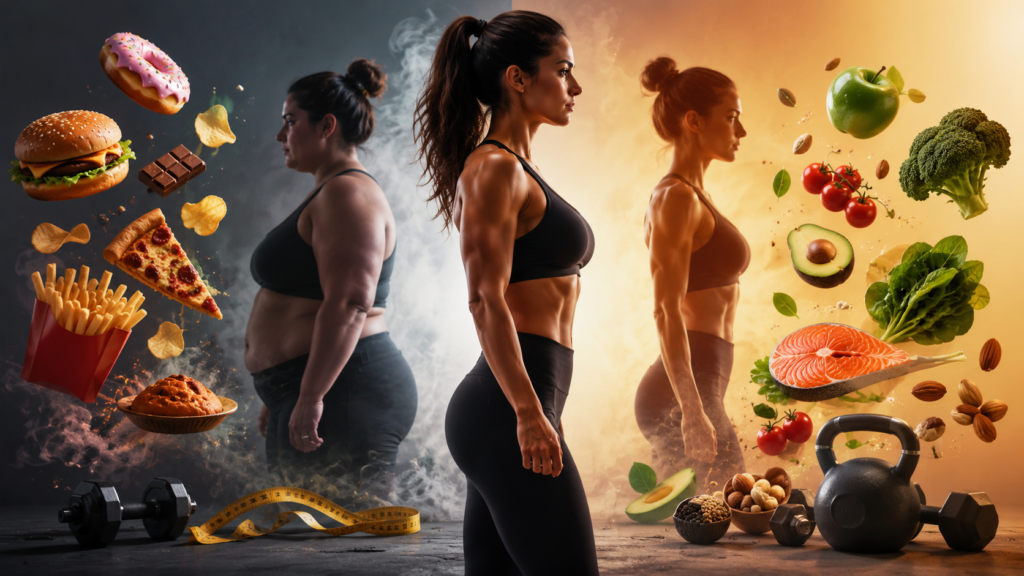
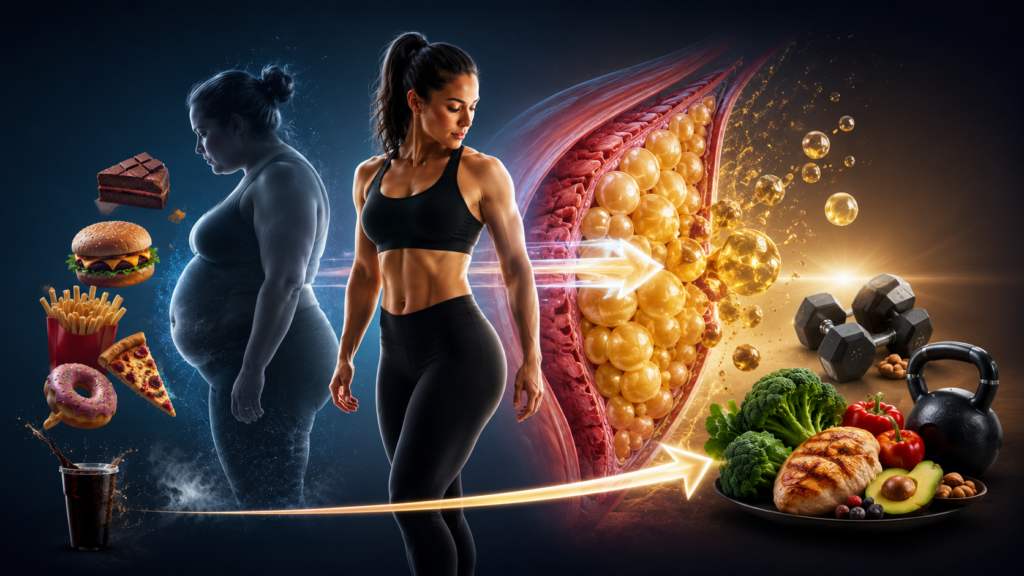
Losing muscle during a weight-loss journey is not desirable. Muscle plays an important role in movement, strength, metabolic health, and physical function. That’s why an effective fat-loss plan should always aim to preserve lean muscle while reducing body fat.
Research consistently shows that combining:
- A moderate calorie deficit,
- Adequate protein intake, and
- Regular resistance training
helps maintain muscle more effectively during fat loss.
Common Misconceptions
Many popular fitness myths continue to circulate despite a lack of scientific evidence.
Sweating does not mean you’re burning fat.Sweat is your body’s natural cooling mechanism. Most of the weight you lose through sweating is temporary water weight, not body fat.
Spot reduction isn’t possible. Performing hundreds of abdominal exercises will strengthen your core, but it won’t selectively burn belly fat. Fat is lost from the body as a whole, with the pattern largely influenced by genetics.
There are no fat-burning foods. While nutrient-dense foods can improve satiety and help you maintain a calorie deficit, no single food can directly “melt” body fat.
The Bigger Picture
Sustainable fat loss isn’t about eliminating entire food groups or following extreme diets.
It’s about building habits that you can maintain over time:
- Eat a balanced diet that meets your nutritional needs.
- Prioritize protein at each meal.
- Strength train regularly.
- Stay physically active throughout the day.
- Get enough sleep and manage stress.
- Be patient and consistent.
Small improvements repeated consistently produce far better long-term results than short periods of extreme dieting.
Final Thoughts
The goal shouldn’t be to become lighter at any cost—it should be to become healthier, stronger, and leaner.
A lower number on the scale doesn’t always reflect better health. Improving body composition by reducing excess body fat while maintaining muscle is a more meaningful measure of progress.
Science doesn’t support shortcuts, but it does support consistency. The most successful fat-loss journey is rarely the fastest—it’s the one you can sustain.